Now I’m Going to Explain to You that I Love My Plum Tree, Fish, Dogs, and Work as Much or Even More Than You Love Your Kids, and Why You’re Going to Take it the Wrong Way
I don’t have kids. I have step-kids, I have dogs, I have fish. I have a plum tree that I planted when we first moved into this house. Our pug Criswell is buried next to it, and we call that small corner of the yard Criswell’s Garden. The step-kids are taking care of themselves. That leaves me to take care of my dogs, my fish, and my tree. They’re my responsibility. They need me. I need them. Yes, I do. I need Criswell’s tree.
These are the things that I have to nurture. Maybe they’re not as fulfilling as your newborn, your five-year-old, your college kid, or maybe they are. My dogs are pretty cool. My fish have personality. They hang around the shallow end of the pond soaking up the sun. Criswell used to get in on hot days and just sit there with water up to his shoulders, sleeping, with the fish swimming around him. It was funny as hell.
I nurture my words too. I tell my life lessons to my fiction and through my fiction and I raise my fiction the way I’d raise a son or daughter. The way I raise my plum tree. From a seed, in the sun, through rough weather. I put my time and effort there the same way I work my ass off to keep the fish alive. It’s a struggle, sometimes, especially in the dead of winter. I’ve got to climb down into the freezing water, haul up the filter, clean out the muddy netting, reconnect the hoses to the waterfall, clamber back in over slick algae-covered rocks and lining, and try not to break my fucking neck or ass. And we’re talking about a seriously fat ass here too.
My fish think about my struggles about as much as my dogs do, about as much as the plum tree does, about as much as my step-kids did when they were fourteen. About as much as I thought of my mother working when I was that age, and even older, much older. I never thanked her for knocking out the mortgage, providing the food, keeping the heat going. I had a lot of rage. I could barely see her sometimes through the red.
I’ve been discussing some of that rage with my wife lately. It’s still there, in its way. My mother passed away ten years ago this past March 12th. I was there at her hospital bed and I watched a million dollars of machinery gauging her death moment by moment, inch by inch. It’s a hell of a thing. I watched the blood pressure monitors and heart monitors slowing, slowing, slowing slowly, mind you, so subtly and slowly that it felt like my own pulse was fading throughout the night. Even after she was dead the machinery kept pumping air into her lungs, forcing her corpse to jerk as if she had suddenly taken a deep breath. She used to do that sometimes when she had nightmares. Her whole body would flail. She’d whine in a voice that sounded nothing like her: childish, frightened, hysterical, crazed. She had recurring nightmares where all her dead family and friends would drive up in a bus and park outside the house, beckoning her to get on board.
Eventually she did.
My recurring nightmare isn’t nearly as interesting. It’s more thematic. Maybe because I’m a writer. Maybe because I’m a fucking nut. I don’t know. Maybe one of your dream interpreters can explain this shit to me. It’s been going on since I was kid.
I dream of corridors. I dream of lengthy hallways with many doors. I dream of hotels, apartment buildings, and schools. I don’t know if I’m lost there or not. I’m just aware of all these passages, all these rooms.
There’s no rage in the nightmares, and no real fear. Just a vaguely unsettling sense of vividness. I’m startled when I wake up and realize I’m here and not there. That’s when I get scared. You know those movies where the dream world is the real world and the real world doesn’t exist? That’s what happens. I wake up micro-traumatized. It takes a moment for me to drift back into myself and for my memories to return. I’m not in the hall of doors, I’m in bed. I’m not in the school, I’m in the house. The house with the wife and the dogs and the fish and the plum tree planted in Criswell’s Garden.
The rage comes, at least partly, from the thing that has become my marrow. It’s the thing I write about constantly in my work, in my essays, in my head from second to second. It’s the thing that is always there, it’s the thing around which all other things revolve. If you’ve read me you know what it is. If you’ve read interviews with me you know what it is. It probably bores you as much as it does me after all this time. You have the birth of your kids as the focus of your life. If anyone asks you what day stands out and you say when little Horatio was born. When little Wilemena was wrapped up and stuck in your arms. That’s what you say. And it’s just as boring as what I say, again and again.
When my mother died I forgot how to speak. At her funeral I could barely nod to others when they approached. The words wouldn’t come. They wouldn’t come to my throat or my hand. I couldn’t write. For six weeks I didn’t write, the longest period of time I didn’t write since I was sixteen. The words returned when I wrote a piece about her death.
My first spoken word as a baby was probably "mama." No one has ever confirmed this, but it’s a fair bet, no? And my first word after her death was mama, or at least about my ma anyway. It feels like that’s the way it had to be.
I talk more to her now than I ever did when she was alive. At her funeral there was an old-fashioned picture of her taken when she was a baby. She died at seventy-one so the oversized photo was that old, with tears and punctures, printed on cardboard like some of those big old pictures were. There was an array of photos placed around her coffin, but that’s the one I wanted.
It’s on my wall downstairs, in a corner of the living room beside another old photo, this one of my wife’s grandparents. Rarely does a day goes by that I don’t walk past it and say, "Thanks, ma."
It’s too little too late, but if she can hear me I hope she understands that now, at least, I’m grateful, and I want her to know it. I want to remember it myself. I’m not fourteen anymore, I’m not a dog or a fish or a plum tree. I owe a debt and I realize it now.
The rage comes from her love. From her need to protect me. I was a moody little fucker. I was hyper-sensitive back then too, same as now. I was seven. The old man had been dying for a while, bit by bit as the lung cancer spread throughout his body. My uncle leant my father a big leather recliner that he sat in wearing his dirty red robe. My old man was in and out of the hospital, not that I realized it, not that anyone told me. I remember him being gone for a few days and then returning. In my excitement I leaped up onto his lap as he sat in the recliner. It hurt him and he grunted in pain, a sound I’ll never forget. I spotted the biopsy scar on his throat for the first time. It was long and scabbed and raw, a sight I’ll never forget. It terrified me. I backed away and my father’s arms came around me telling me it was okay.
I had hurt my father because no one had told me anything.
They didn’t tell me when he died either. I thought I was off to my aunt’s just to visit with my cousins. They all went to the wake and funeral while I sat watching television with my grandmother. They were all in the know. They were aware. They understood. They dealt with their grief together. They shared. They bonded. They held each other. They helped each other.
The rage comes from my aloneness. My singularity. My childish ignorance which never ends. For forty years I’ve been grieving alone.
They thought it would be smart, the foolish amateur psychologists, to build me up in a bubble of happiness first. They gave me gifts for no reason. They taught me Monopoly in the basement of my uncle’s house. They let me win. I remember practically shivering with delight. My brother and my cousins circling the board, watching me, waiting. And at my happiest my brother told me my dad was dead.
You know what happens to stone or steel after it’s heated and then has ice water thrown on it. It becomes brittle. It shatters.
I cried in my mother’s arms for an hour, but it wasn’t just a venting of pain, it was the birth of the seed of rage that goes on and on. That is in all my pages and all my days. It is the event that makes me me. The one I share with you. I try to make you aware, I want you to understand, it’s how we bond, you and I. If you read my work. If you read this. If we sit for coffee, if we have a beer. If I talk to you on the phone, if you visit my FB page. If I tweet in your ear. If you pet my dogs, if you stare at my fish, if the leaves of the plum tree happen to ride the wind to your yard, where your kids are playing. Where they’re riding their trikes, where they’re borrowing your car.
You have your children and I have mine. Mine mean as much to me or even more than yours mean to you. This is why. Yours have voices. Mine don’t speak. Like me, for a time, they’ve lost their words. I provide those for them too. My books, my children, don’t slide out of me fully-formed. I have to build them with my hands, piece by piece, word by word, voice by voice. You need your kids to fulfill you because you’re parents. I need mine because I’m not.
About Me

- Tom Piccirilli
- "We need to make books cool again. If you go home with someone & they don't have books, don't fuck 'em."--John Waters
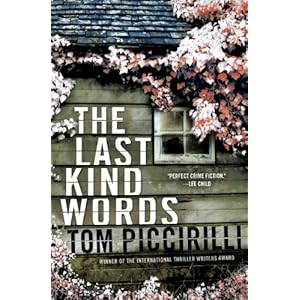
I'm the author of more than twenty novels including SHADOW SEASON, THE COLD SPOT, THE COLDEST MILE, THE MIDNIGHT ROAD, THE DEAD LETTERS, and A CHOIR OF ILL CHILDREN. Look for my next one THE LAST KIND WORDS due out May '12 from Bantam Books. Contact: PicSelf1@aol.com
Monday, March 26, 2012


Tuesday, March 13, 2012
Some More Kind Words for THE LAST KIND WORDS
Thanks to all these generous folks who recently took the time out to read advance copies of TLKW and provide some sweet sound bites.
"Tom Piccirilli’s THE LAST KIND WORDS is a story borne of dark legacies—the legacy of family violence and loss. With vivid prose and a palpable urgency, it succeeds utterly as a crime tale. At the same time, it reminds us that the crimes can emanate from both the darkest and lightest of places, the heart of a damaged family rendered with clear-eyed yet fervent beauty."--Megan Abbott, author of THE END OF EVERYTHING and DARE ME
"MYSTIC RIVER set the bar on classic literary mystery and THE LAST KIND WORDS is a novel on the same superb playing field. Compassionate, fascinating, and with an adrenaline narrative that is as gripping as it is moving. Pure alchemy."--Ken Bruen, author of THE GUARDS and HEADSTONE
"Piccirilli's family of heartbroken thieves bound by love, secrets, and family codes, kept me turning the pages until the very end. It pained me to put this book down at night. Tom Piccirilli is the leader of a new pack of writers combining the best elements of crime, mystery, and literary fiction in a way that would make Chandler proud. I loved this book and can't wait for the sequel."--Sara Gran, author of DOPE and CLAIRE DEWITT AND THE CITY OF THE DEAD.
"THE LAST KIND WORDS will bring Tom Piccirilli the attention he's long deserved. It resonates with the same passion, hearbreak, style, and power as the work of Dennis Lehane and Walter Mosley. An amazing novel that is both a page-turner and a stunning look at a criminal family."--Ed Gorman, author of BLINDSIDE and BAD MOON RISING
"Tom Piccirilli’s THE LAST KIND WORDS is a story borne of dark legacies—the legacy of family violence and loss. With vivid prose and a palpable urgency, it succeeds utterly as a crime tale. At the same time, it reminds us that the crimes can emanate from both the darkest and lightest of places, the heart of a damaged family rendered with clear-eyed yet fervent beauty."--Megan Abbott, author of THE END OF EVERYTHING and DARE ME
"MYSTIC RIVER set the bar on classic literary mystery and THE LAST KIND WORDS is a novel on the same superb playing field. Compassionate, fascinating, and with an adrenaline narrative that is as gripping as it is moving. Pure alchemy."--Ken Bruen, author of THE GUARDS and HEADSTONE
"Piccirilli's family of heartbroken thieves bound by love, secrets, and family codes, kept me turning the pages until the very end. It pained me to put this book down at night. Tom Piccirilli is the leader of a new pack of writers combining the best elements of crime, mystery, and literary fiction in a way that would make Chandler proud. I loved this book and can't wait for the sequel."--Sara Gran, author of DOPE and CLAIRE DEWITT AND THE CITY OF THE DEAD.
"THE LAST KIND WORDS will bring Tom Piccirilli the attention he's long deserved. It resonates with the same passion, hearbreak, style, and power as the work of Dennis Lehane and Walter Mosley. An amazing novel that is both a page-turner and a stunning look at a criminal family."--Ed Gorman, author of BLINDSIDE and BAD MOON RISING
Monday, March 12, 2012
Book Reviews
You’ve got to give it up to Titan Books, people. Not only did this UK publisher save the Hard Case Crime line, but they’re also bringing out a trio of Mickey Spillane & Max Allan Collins novels as we as reprinting some great pulp, including Sax Rohmer’s Fu-Manchu books. I’m loving these folks.
THE MYSTERY OF DR. FU-MANCHU and THE RETURN OF DR. FU-MANCHU are the first two collections of Sax Rohmer tales featuring Burmese police commissioner Nayland Smith, his good friend Dr. Petrie (the narrator), and the insidious megalomania Dr. Fu-Manchu. Using a variety of exotic, and often poisonous insects, animals, and plants, agents of the so-called "devil doctor" murder anyone who might get in the way of his plans to take over the world. The most famous "yellow peril" creation featuring the inscrutable occidental, the stereotype has at least some its origins in the opium wars of the 1840s and Sino-Japanese war of the late nineteenth century. The pulp action/mystery tales of Rohmer are great melodramatic fun, especially when the beautiful slave girl Karamaneh foregoes her master and falls in love with Petrie. If you dig the melodramatic flare of classic pulp fiction (Rohmer never met an exclamation point he didn’t like) and you yearn for larger-than-life villains bent on world domination, then Fu-Manchu is your devil doctor. Novels such as DAUGHTER OF FU-MANCHU, THE WIFE OF FU-MANCHU, and EMPEROR FU-MANCHU to follow soon.
LADY, GO DIE! is the latest unfinished manuscript begun by Mickey Spillane decades ago and recently finished by his friend and protege Max Allan Collins. This one holds special interest for any Mike Hammer fan as LADY, GO DIE! was originally intended to be the second full-length Hammer novel following the mind-blowingly successful I, THE JURY. The time is shortly after WW II and the events of ITJ. Mike and his ever-trusty, beautiful sidekick Velda are vacationing on Long Island in the beach town of Sidon. There Mike immediately finds himself in the middle of a fracas as a bunch of dirty cops work over a mentally handicapped homeless artist named Poochie. The cops think Poochie knows something about the missing lady who runs the local gambling house.
As Mike is wont to do, he quickly dispatches the bad guys and helps Poochie to recover. Soon though he’s on the trail of a murderer who poses his naked female victims in highly staged, dramatic, public venues. Since the murders are spread out across several jurisdictions, the cops haven’t put the killings together, but Mike is on the case. As he deals with mobsters, gamblers, corrupt cops, and an insane murderer, he also finds time to tame a cunning dame from his past who uses sex to bring weak men low.
It’s a testament to how well Max Allan Collins knows his mentor’s writing that you won’t be able to see where Spillane’s original manuscript ends and Collins’s begins (or, more likely, which portion was written by which author). This is true of all their collaborations, but Collins now slips into Mike Hammer’s persona Spillane’s style so perfectly, and uses the motifs of the time so adeptly, that LADY, GO DIE! reads like the hardest of the hardboiled, firmly set in the origins of the Hammer universe.
In Ed Gorman’s latest Dev Conrad (STRANGLEHOLD, SLEEPING DOGS) mystery BLINDSIDE, freelance political consultant Dev Conrad decides to help out his old friend Tom Ward. Tom’s son, Jeff, is an arrogant, womanizing, liberal incumbent whose weakening campaign is running into troubled waters. Strategy information is being leaked to Ward’s wealthy right-wing challenger, Rusty Burkhart, and Dev is trying to find out who the traitor among Ward’s staff is. When speech writer Jim Waters is murdered and David Nolan, Ward’s chief of staff disappears, Dev digs even deeper to find that Ward is being blackmailed over a video involving a prostitute.
When liberal incumbent Jeff Ward’s father Tom persuades Dev to spend some time with his son’s flailing campaign, Jeff’s speech writer Jim Waters hasn’t yet been shot to death. And Tom can’t even identify the other problems. But it’s clear that trouble is afoot. Someone close to Ward is evidently leaking sensitive information to Rusty Burkhart, his millionaire right-wing challenger. David Nolan, the candidate’s lifelong friend and chief of staff, disappears almost the moment Dev first pokes his nose into the campaign tent. And Dev soon learns that Ward is being blackmailed over a steamy videotape starring him and a prostitute.
Also on hand is Sylvia Fordham, Burkhart’s conservative consultant who gloats as Ward’s poll numbers sink and Burkhart’s rise. Dev has plenty of suspects for all the troubles and wrongdoings, but only one bit of positive light to part the clouds; Jennifer Conners, a Goth teenager, is the only person surrounding Ward who actually seems to care about the nature of politics, the fall of her hero, and the outcome of the election as a new hope for America.
Ed Gorman has given us another inside look at the failing two-party political system. It’s sharply written, acerbic, gripping, and eye-opening look at the ruination of American politics. Gorman’s keen eye for detail adds some nice nuances and extra facets to the novel that puts an emphasis not only on who done it and why, but also on how such shenanigans cost the nation more than they’ll ever completely understand.
The most recent addition to Bill Pronzini’s long-running Nameless Detective series HELLBOX recalls to mind one of the most memorable earlier titles SHACKLES. In SHACKLES, Nameless spent three months locked away in an isolated cabin. In HELLBOX, Nameless, aka "Bill," and his wife Kerry are considering buying a vacation home in the rural community of Six Pines. While dining they happen to see the arrogant, ignorant Pete Balfour, being mocked by those townsfolk tired of his racist, sexist, dull-witted slurs. Balfour’s publicly referred to as the Mayor of Asshole Valley, a derisive nickname laid on him by neighbor Ned Verriker. Ned thinks that Balfour can shrug off a little joking, but he’s wrong. Balfour is more unstable than anyone can guess.
When Balfour sets in motion his vengeance against Verriker, Kerry just happens to be in the wrong place at the wrong time. Balfour scoops her up and holds her prisoner as at first Nameless searches for his beloved alone, and then calls in his cool, steely associate Jake Runyon to help with the hunt.
The narrative alternates between all the primary characters including Balfour’s belligerent perspective and Kerry’s terrified internal monologue. We watch as a driven Nameless is shaken by the irrepressible fear for his lost wife to Jake’s sharp, calm council and relentless drive towards the truth. HELLBOX is another fine entry in a long line of first-rate private eye novels featuring the iconic Nameless Detective from MWA Grandmaster Bill Pronzini. Pick it up asap, and if you haven’t already read all the previous books then buy any and all you can get your hands on.
THE MYSTERY OF DR. FU-MANCHU and THE RETURN OF DR. FU-MANCHU are the first two collections of Sax Rohmer tales featuring Burmese police commissioner Nayland Smith, his good friend Dr. Petrie (the narrator), and the insidious megalomania Dr. Fu-Manchu. Using a variety of exotic, and often poisonous insects, animals, and plants, agents of the so-called "devil doctor" murder anyone who might get in the way of his plans to take over the world. The most famous "yellow peril" creation featuring the inscrutable occidental, the stereotype has at least some its origins in the opium wars of the 1840s and Sino-Japanese war of the late nineteenth century. The pulp action/mystery tales of Rohmer are great melodramatic fun, especially when the beautiful slave girl Karamaneh foregoes her master and falls in love with Petrie. If you dig the melodramatic flare of classic pulp fiction (Rohmer never met an exclamation point he didn’t like) and you yearn for larger-than-life villains bent on world domination, then Fu-Manchu is your devil doctor. Novels such as DAUGHTER OF FU-MANCHU, THE WIFE OF FU-MANCHU, and EMPEROR FU-MANCHU to follow soon.
LADY, GO DIE! is the latest unfinished manuscript begun by Mickey Spillane decades ago and recently finished by his friend and protege Max Allan Collins. This one holds special interest for any Mike Hammer fan as LADY, GO DIE! was originally intended to be the second full-length Hammer novel following the mind-blowingly successful I, THE JURY. The time is shortly after WW II and the events of ITJ. Mike and his ever-trusty, beautiful sidekick Velda are vacationing on Long Island in the beach town of Sidon. There Mike immediately finds himself in the middle of a fracas as a bunch of dirty cops work over a mentally handicapped homeless artist named Poochie. The cops think Poochie knows something about the missing lady who runs the local gambling house.
As Mike is wont to do, he quickly dispatches the bad guys and helps Poochie to recover. Soon though he’s on the trail of a murderer who poses his naked female victims in highly staged, dramatic, public venues. Since the murders are spread out across several jurisdictions, the cops haven’t put the killings together, but Mike is on the case. As he deals with mobsters, gamblers, corrupt cops, and an insane murderer, he also finds time to tame a cunning dame from his past who uses sex to bring weak men low.
It’s a testament to how well Max Allan Collins knows his mentor’s writing that you won’t be able to see where Spillane’s original manuscript ends and Collins’s begins (or, more likely, which portion was written by which author). This is true of all their collaborations, but Collins now slips into Mike Hammer’s persona Spillane’s style so perfectly, and uses the motifs of the time so adeptly, that LADY, GO DIE! reads like the hardest of the hardboiled, firmly set in the origins of the Hammer universe.
In Ed Gorman’s latest Dev Conrad (STRANGLEHOLD, SLEEPING DOGS) mystery BLINDSIDE, freelance political consultant Dev Conrad decides to help out his old friend Tom Ward. Tom’s son, Jeff, is an arrogant, womanizing, liberal incumbent whose weakening campaign is running into troubled waters. Strategy information is being leaked to Ward’s wealthy right-wing challenger, Rusty Burkhart, and Dev is trying to find out who the traitor among Ward’s staff is. When speech writer Jim Waters is murdered and David Nolan, Ward’s chief of staff disappears, Dev digs even deeper to find that Ward is being blackmailed over a video involving a prostitute.
When liberal incumbent Jeff Ward’s father Tom persuades Dev to spend some time with his son’s flailing campaign, Jeff’s speech writer Jim Waters hasn’t yet been shot to death. And Tom can’t even identify the other problems. But it’s clear that trouble is afoot. Someone close to Ward is evidently leaking sensitive information to Rusty Burkhart, his millionaire right-wing challenger. David Nolan, the candidate’s lifelong friend and chief of staff, disappears almost the moment Dev first pokes his nose into the campaign tent. And Dev soon learns that Ward is being blackmailed over a steamy videotape starring him and a prostitute.
Also on hand is Sylvia Fordham, Burkhart’s conservative consultant who gloats as Ward’s poll numbers sink and Burkhart’s rise. Dev has plenty of suspects for all the troubles and wrongdoings, but only one bit of positive light to part the clouds; Jennifer Conners, a Goth teenager, is the only person surrounding Ward who actually seems to care about the nature of politics, the fall of her hero, and the outcome of the election as a new hope for America.
Ed Gorman has given us another inside look at the failing two-party political system. It’s sharply written, acerbic, gripping, and eye-opening look at the ruination of American politics. Gorman’s keen eye for detail adds some nice nuances and extra facets to the novel that puts an emphasis not only on who done it and why, but also on how such shenanigans cost the nation more than they’ll ever completely understand.
The most recent addition to Bill Pronzini’s long-running Nameless Detective series HELLBOX recalls to mind one of the most memorable earlier titles SHACKLES. In SHACKLES, Nameless spent three months locked away in an isolated cabin. In HELLBOX, Nameless, aka "Bill," and his wife Kerry are considering buying a vacation home in the rural community of Six Pines. While dining they happen to see the arrogant, ignorant Pete Balfour, being mocked by those townsfolk tired of his racist, sexist, dull-witted slurs. Balfour’s publicly referred to as the Mayor of Asshole Valley, a derisive nickname laid on him by neighbor Ned Verriker. Ned thinks that Balfour can shrug off a little joking, but he’s wrong. Balfour is more unstable than anyone can guess.
When Balfour sets in motion his vengeance against Verriker, Kerry just happens to be in the wrong place at the wrong time. Balfour scoops her up and holds her prisoner as at first Nameless searches for his beloved alone, and then calls in his cool, steely associate Jake Runyon to help with the hunt.
The narrative alternates between all the primary characters including Balfour’s belligerent perspective and Kerry’s terrified internal monologue. We watch as a driven Nameless is shaken by the irrepressible fear for his lost wife to Jake’s sharp, calm council and relentless drive towards the truth. HELLBOX is another fine entry in a long line of first-rate private eye novels featuring the iconic Nameless Detective from MWA Grandmaster Bill Pronzini. Pick it up asap, and if you haven’t already read all the previous books then buy any and all you can get your hands on.
Thursday, March 1, 2012
Update
 CLOWN IN THE MOONLIGHT is free on Kindle today but tomorrow it goes back to its original price of $2.99. In the last 48 hours we’ve had over 6,000 downloads and the book peaked at around #50 on the Kindle Free Bestseller list. I appreciate everyone who showed enough interest to read the piece and I hope you all like it enough to check out more of my work.
CLOWN is based in part on the true story of Ricky Kasso, the so-called Acid King, who murdered a friend in the Northport woods back in '84 claiming Satan told him to do it, then proceeded to bring high school classmates to view the mutilated body for days afterward. Occult, hardboiled, and noir matters enter the mix as a nameless drifter teaches Ricky and friends what the true nature of hell is really all about. Extras include the first chapter of my forthcoming Bantam hardcover THE LAST KIND WORDS (due out June 5), the first chapter of my digital-only dark fantasy novel NIGHTJACK, and the short horror story "Shadder" from my collection FUTILE EFFORTS.
Available today is issue #1 of the new crime e-zine THE BIG CLICK, featuring fiction by Ken Bruen, an interview I conducted with the fantastic Joe Lansdale, and my non-fic column "Fat Burglar Blues." Free content will be rolling out over the next month, or you can buy an e-copy for just $2.99.
And it’s T-minus three months until the release of THE LAST KIND WORDS. Currently Random House is putting together the audio edition, and just recently this generous blurb came in.
"MYSTIC RIVER set the bar on classic literary mystery and THE LAST KIND WORDS is a novel on the same superb playing field. Compassionate, fascinating, and with an adrenaline narrative that is as gripping as it is moving. Pure alchemy."--Ken Bruen, author of THE GUARDS and HEADSTONE
Also, I’m nearly done with the follow-up novel THE LAST WHISPER IN THE DARK, which you can look for summer of ‘13.
Tuesday, January 17, 2012
Every Shallow Cut nominated for a Spinetingler Award
Just received word that my noirella EVERY SHALLOW CUT, published by Chizine Books, has been nominated for a Spinetingler award for best novella. I’m honored to be included with writers like Ray Banks, Nik Korpon, Fingers Murphy, Gerard Brennan, Nigel Bird, Chuck Wendig and other talented folks. Voting runs from now until the end of the month. Go have your say.
You can visit my Amazon page to pick up any of my Kindle releases. We've extended our sale on three of my titles. My collection FUTILE EFFORTS and my noirellas YOU'D BETTER WATCH OUT and ALL YOU DESPISE are all just $.99 for the time being. For a couple of bucks more you can pick up NIGHTJACK, FUCKIN' LIE DOWN ALREADY, THE FEVER KILL, THRUST, THE NOBODY, THE LAST DEEP BREATH, LOSS, PENTACLE, A LOWER DEEP or any of my Bantam titles including THE COLD SPOT, SHADOW SEASON, and A CHOIR OF ILL CHILDREN.
==
I also just received proofs of my next novel THE LAST KIND WORDS, due out in hardcover from Bantam on June 5. You can check out the synopsis and blurbs on the Amazon page. You can also pre-order, "like" the book, and tag it, if you're so inclined. Thanks to everyone who's already shown such incredible support for the novel. I already have a feeling this is going to be the best selling book of my career. Grazie, all.
Library Journal ran a nice little preview of TLKW a week ago, along with other titles streeting this summer. Read the brief article here.
==
Crime Factory #9 packs a hell of a lot of knockout content: pieces by Scott Phillips, Benjamin Whitmer, Daniel B. O'Shea, Ray Banks, Paul D Brazill, and a new short story by me. Features by Johnny Shaw, Cameron Ashley, Jimmy Callaway. Read, enjoy, quiver.
You can visit my Amazon page to pick up any of my Kindle releases. We've extended our sale on three of my titles. My collection FUTILE EFFORTS and my noirellas YOU'D BETTER WATCH OUT and ALL YOU DESPISE are all just $.99 for the time being. For a couple of bucks more you can pick up NIGHTJACK, FUCKIN' LIE DOWN ALREADY, THE FEVER KILL, THRUST, THE NOBODY, THE LAST DEEP BREATH, LOSS, PENTACLE, A LOWER DEEP or any of my Bantam titles including THE COLD SPOT, SHADOW SEASON, and A CHOIR OF ILL CHILDREN.
==
I also just received proofs of my next novel THE LAST KIND WORDS, due out in hardcover from Bantam on June 5. You can check out the synopsis and blurbs on the Amazon page. You can also pre-order, "like" the book, and tag it, if you're so inclined. Thanks to everyone who's already shown such incredible support for the novel. I already have a feeling this is going to be the best selling book of my career. Grazie, all.
Library Journal ran a nice little preview of TLKW a week ago, along with other titles streeting this summer. Read the brief article here.
==
Crime Factory #9 packs a hell of a lot of knockout content: pieces by Scott Phillips, Benjamin Whitmer, Daniel B. O'Shea, Ray Banks, Paul D Brazill, and a new short story by me. Features by Johnny Shaw, Cameron Ashley, Jimmy Callaway. Read, enjoy, quiver.
Thursday, January 12, 2012
2 Recent Reads: Westlake & Lansdale
The Comedy is Finished by Donald Westlake
Hard Case Crime
This book breaks my heart for two reasons. One, it’s probably the last Donald Westlake novel we’ll ever see unless they find another last lost manuscript by the master, which I hope for daily. Westlake’s work is a joy whether it’s one of his standalone novels, a laugh-out-loud humorous Dortmunder scheme, or a Richard Stark/Parker tale hardboiled enough to peel the skin from your face.
To add to that overall sadness is the fact that Westlake never got to see the book published in his lifetime despite the fact that this first-rate novel was written some thirty years ago. Westlake thought that the subject matter too closely resembled Martin Scorsese’s The King of Comedy, which hit the big screen shortly after Westlake completed The Comedy is Finished.
Set in the late 70s, the novel is an edgy suspense thriller about a kidnapping gone wildly wrong (do kidnappings ever go right?). When aging, acclaimed, right-winger comedian Koo Davis is snatched by members of a social revolution that’s grown passe, ideologies clash dangerously with Koo’s life on the line. Ironically imprisoned in a ritzy Hollywood home, Koo constantly cracks wise in order to keep his spirits up in the face of his often enraged, depressed, and possibly insane captors.
The novel is rife with unexpected scenes of great emotional power and poignancy. As the FBI’s chief investigator nicely sums up, the revolutionaries might’ve once been considered heroes, but the movement itself lost its way. The young captors try to hold onto their purity of vision even while they slowly come to realize how foolish their attempts at revolt have become. Foolish, deadly, and probably meaningless as their fight for a lost cause pushes them toward greater and greater extremes. As the story unfolds Koo learns that one member of the People’s Revolutionary Army may have a completely different grievance against him, one that might change Koo’s own outlook on life. You just don’t expect a razor-wire read like this to be so full of feeling.
To my mind, Westlake could have easily changed his protagonist from a comedian to any other entertainment personage and just given the guy an overdeveloped funny bone. The fact that he’s a comedian isn’t as important as that he’s a celebrity with some wit. But for someone like Westlake, who had hit series on his hands, screenwriting gigs, and an Oscar to win (for the screenplay of THE GRIFTERS), I suppose he just didn’t mind laying the manuscript on a closet shelf while keeping busy with so much else on his plate. In any event, THE COMEDY IS FINISHED is a perfect capper to a brilliant career.
Edge of Dark Water by Joe Lansdale
Mulholland Books
We all know Joe Lansdale can do it all. He’s written thrillers, westerns, young adult, and horror novels, as well as fusions containing elements of each. His latest, EDGE OF DARK WATER, is more or less one of these composites that gives a perfect arena to Lansdale’s strengths as a classic storyteller.
When teenaged May Lynn’s body is pulled from the Sabine River tied to an old sewing machine, her friends Sue Ellen, Jinx, and Terry take it upon themselves to give her a proper fond farewell. They decide to burn her remains and carry the ashes to Hollywood, a place where pretty May Lynn always believed she would someday become a movie star. The adventurous trio, along with Sue Ellen’s alcoholic mother, steal a raft and escape from town with some stolen loot, barely ahead of Sue Ellen’s abusive step-father and several other cretinous, criminal characters. As their trip unfolds they run across an odd array of broken and lamentable folks, including a preacher with a horrible guilty secret and an ancient crone with no reason to live except passing on her bitterness. They also learn that Skunk, a legendary beast of a man raised in the river bottoms who’ll commit any atrocity he’s hired to do, may be on their heels.
Despite the novel being set during the Depression, the story has a certain timeless nature. We get the feeling that this tale could almost have taken place at any period between the 1880s and the 1980s. East Texas remains as dark and romanticized as Hannibal, Missouri, full of wonder and possibility, thick with traps and villains.
This is a sharp, incisive, fun tale showing Lansdale’s fortitude at roping the reader into an impressive, alluring narrative. The flaws of our protagonists are what make them so sympathetic and relatable, their journey such an earnest and archetypal one. Even though this is only January, I’m certain EDGE OF DARK WATER will wind up on top ten of ‘12 lists come a year from now.
By the way, look for my interview with Joe in the first online issue of the new ezine The Big Click edited by Nick Mamatas, premiering in March.
Hard Case Crime
This book breaks my heart for two reasons. One, it’s probably the last Donald Westlake novel we’ll ever see unless they find another last lost manuscript by the master, which I hope for daily. Westlake’s work is a joy whether it’s one of his standalone novels, a laugh-out-loud humorous Dortmunder scheme, or a Richard Stark/Parker tale hardboiled enough to peel the skin from your face.
To add to that overall sadness is the fact that Westlake never got to see the book published in his lifetime despite the fact that this first-rate novel was written some thirty years ago. Westlake thought that the subject matter too closely resembled Martin Scorsese’s The King of Comedy, which hit the big screen shortly after Westlake completed The Comedy is Finished.
Set in the late 70s, the novel is an edgy suspense thriller about a kidnapping gone wildly wrong (do kidnappings ever go right?). When aging, acclaimed, right-winger comedian Koo Davis is snatched by members of a social revolution that’s grown passe, ideologies clash dangerously with Koo’s life on the line. Ironically imprisoned in a ritzy Hollywood home, Koo constantly cracks wise in order to keep his spirits up in the face of his often enraged, depressed, and possibly insane captors.
The novel is rife with unexpected scenes of great emotional power and poignancy. As the FBI’s chief investigator nicely sums up, the revolutionaries might’ve once been considered heroes, but the movement itself lost its way. The young captors try to hold onto their purity of vision even while they slowly come to realize how foolish their attempts at revolt have become. Foolish, deadly, and probably meaningless as their fight for a lost cause pushes them toward greater and greater extremes. As the story unfolds Koo learns that one member of the People’s Revolutionary Army may have a completely different grievance against him, one that might change Koo’s own outlook on life. You just don’t expect a razor-wire read like this to be so full of feeling.
To my mind, Westlake could have easily changed his protagonist from a comedian to any other entertainment personage and just given the guy an overdeveloped funny bone. The fact that he’s a comedian isn’t as important as that he’s a celebrity with some wit. But for someone like Westlake, who had hit series on his hands, screenwriting gigs, and an Oscar to win (for the screenplay of THE GRIFTERS), I suppose he just didn’t mind laying the manuscript on a closet shelf while keeping busy with so much else on his plate. In any event, THE COMEDY IS FINISHED is a perfect capper to a brilliant career.
Edge of Dark Water by Joe Lansdale
Mulholland Books
We all know Joe Lansdale can do it all. He’s written thrillers, westerns, young adult, and horror novels, as well as fusions containing elements of each. His latest, EDGE OF DARK WATER, is more or less one of these composites that gives a perfect arena to Lansdale’s strengths as a classic storyteller.
When teenaged May Lynn’s body is pulled from the Sabine River tied to an old sewing machine, her friends Sue Ellen, Jinx, and Terry take it upon themselves to give her a proper fond farewell. They decide to burn her remains and carry the ashes to Hollywood, a place where pretty May Lynn always believed she would someday become a movie star. The adventurous trio, along with Sue Ellen’s alcoholic mother, steal a raft and escape from town with some stolen loot, barely ahead of Sue Ellen’s abusive step-father and several other cretinous, criminal characters. As their trip unfolds they run across an odd array of broken and lamentable folks, including a preacher with a horrible guilty secret and an ancient crone with no reason to live except passing on her bitterness. They also learn that Skunk, a legendary beast of a man raised in the river bottoms who’ll commit any atrocity he’s hired to do, may be on their heels.
Despite the novel being set during the Depression, the story has a certain timeless nature. We get the feeling that this tale could almost have taken place at any period between the 1880s and the 1980s. East Texas remains as dark and romanticized as Hannibal, Missouri, full of wonder and possibility, thick with traps and villains.
This is a sharp, incisive, fun tale showing Lansdale’s fortitude at roping the reader into an impressive, alluring narrative. The flaws of our protagonists are what make them so sympathetic and relatable, their journey such an earnest and archetypal one. Even though this is only January, I’m certain EDGE OF DARK WATER will wind up on top ten of ‘12 lists come a year from now.
By the way, look for my interview with Joe in the first online issue of the new ezine The Big Click edited by Nick Mamatas, premiering in March.
Monday, November 21, 2011
Check it out: Thomas Perry's POISON FLOWER
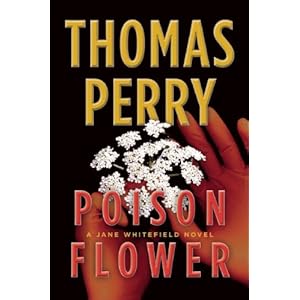 POISON FLOWER is the seventh novel in Thomas Perry’s highly acclaimed Jane Whitefield series, about a Native American "guide" who helps "runners" to escape from their enemies. In the past Jane has helped women disappear from abusive husbands and helpless witnesses elude drug cartels. In POISON FLOWER Jane plans and executes a daring courtroom breakout for James Shelby, an innocent dupe unjustly convicted of his wife’s murder. Things go perfectly for Shelby, but not so great for Jane herself, who is immediately abducted by a group of men posing as cops, shot in the leg, and tortured for answers on the whereabouts of Shelby.
Drugged and in agony Jane summons all of her willpower to keep quiet in the face of her torment even while she dreams of ancient Seneca warriors and the ghost of Harry Kemple, her one past mistake, a poker player she originally spirited away into a new life and then accidentally betrayed to a clever killer.
Refusing to give up Shelby’s only infuriates her captors, who work for the wealthy man who actually killed Shelby’s wife. Eventually she’s given up to auction–where all of evil adversaries of her previous runners gather together to bid on the chance to personally enslave or kill her.
But as any fan of the series knows, Jane is no weak lily. Instead, she’s quite a poison flower herself, prepared to do battle to the very end.
With a Perry novel you get full-on, relentless suspense and pretty much non-stop action. But smart, intense action. It’s not just a wild flurry of blood and killing, but instead wisely parceled out doses that build naturally upon character and narrative. Even when things get very nasty, the bloodletting only progresses the plot. One of the most fascinating elements of the series is how Jane draws on the lessons and traditions of the Seneca tribe in order to survive her adventurous life and dispatch her foes. POISON FLOWER is classic Perry, a novel that hurtles down desert highways at triple digits and will leave you with blisters on your hands from flipping pages so fast.
Mysterious Press
March 2012
$24
Subscribe to:
Posts (Atom)